Literary Devices Crossword Puzzle | Free Printable Worksheet
A fast review of the terms high schoolers need to talk about how a text works: figurative language, sound devices, and the narrative techniques authors use to build meaning. Ready to print as a bell ringer, an AP Lit warm-up, or homework — no prep beyond hitting print.
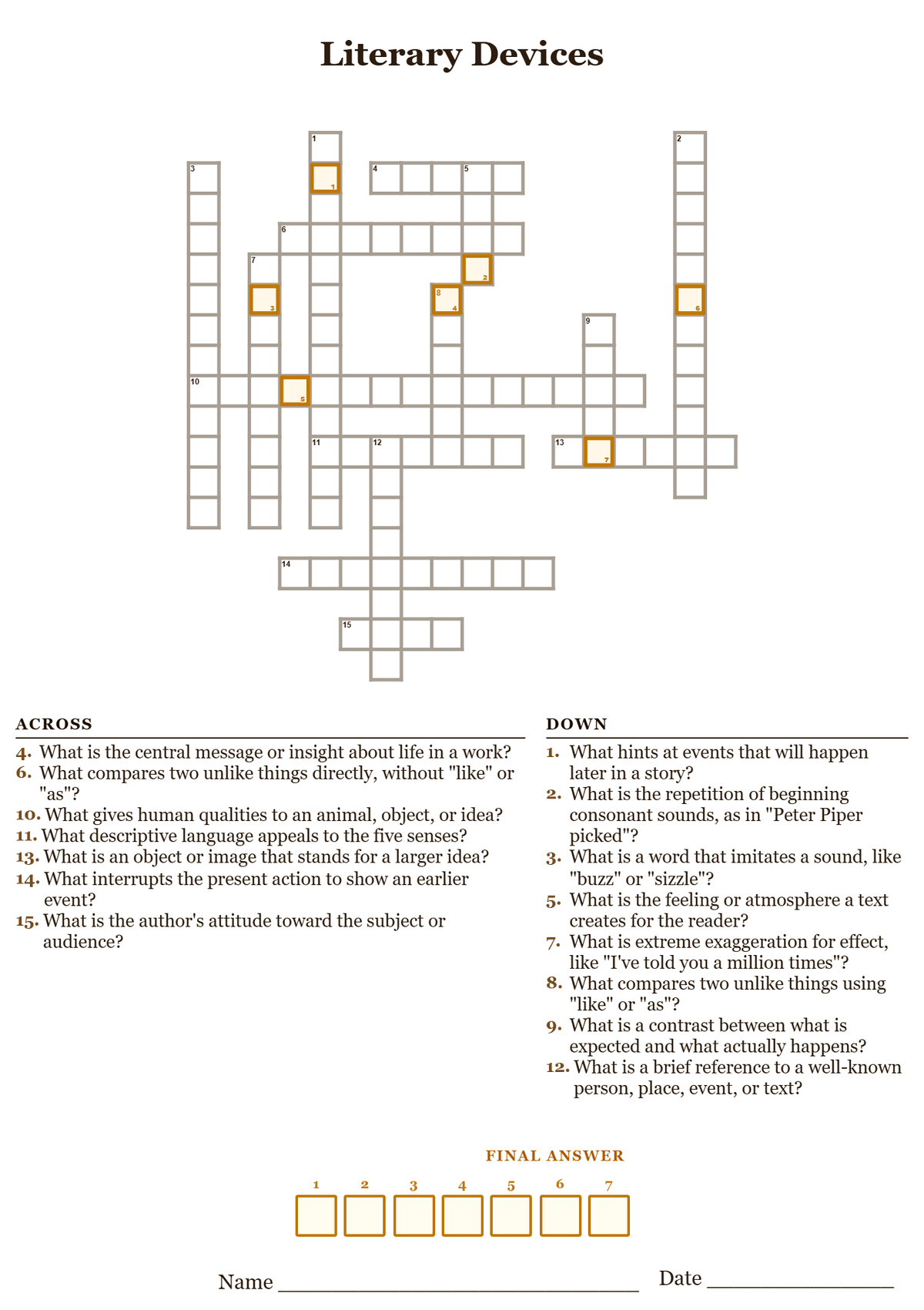
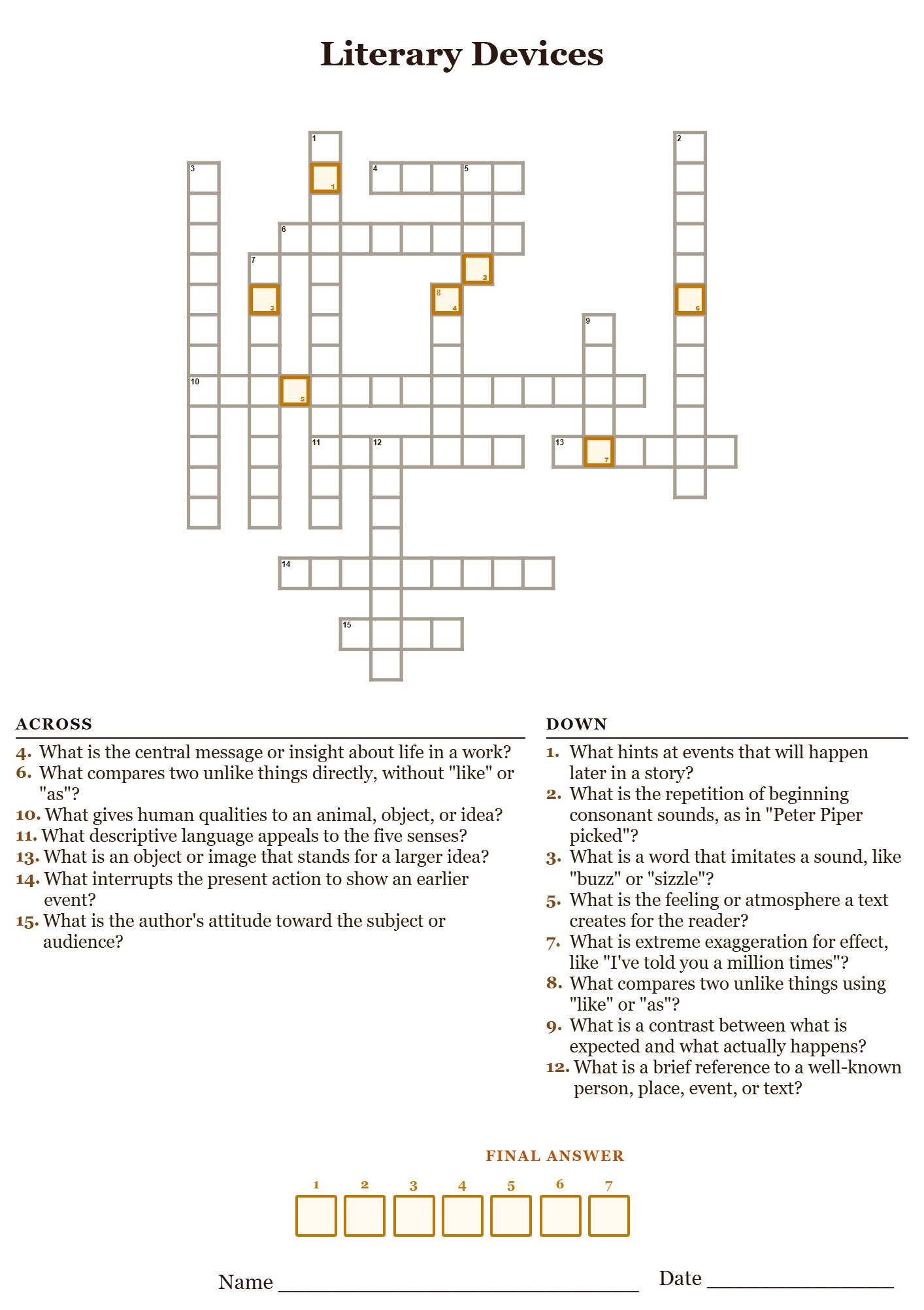
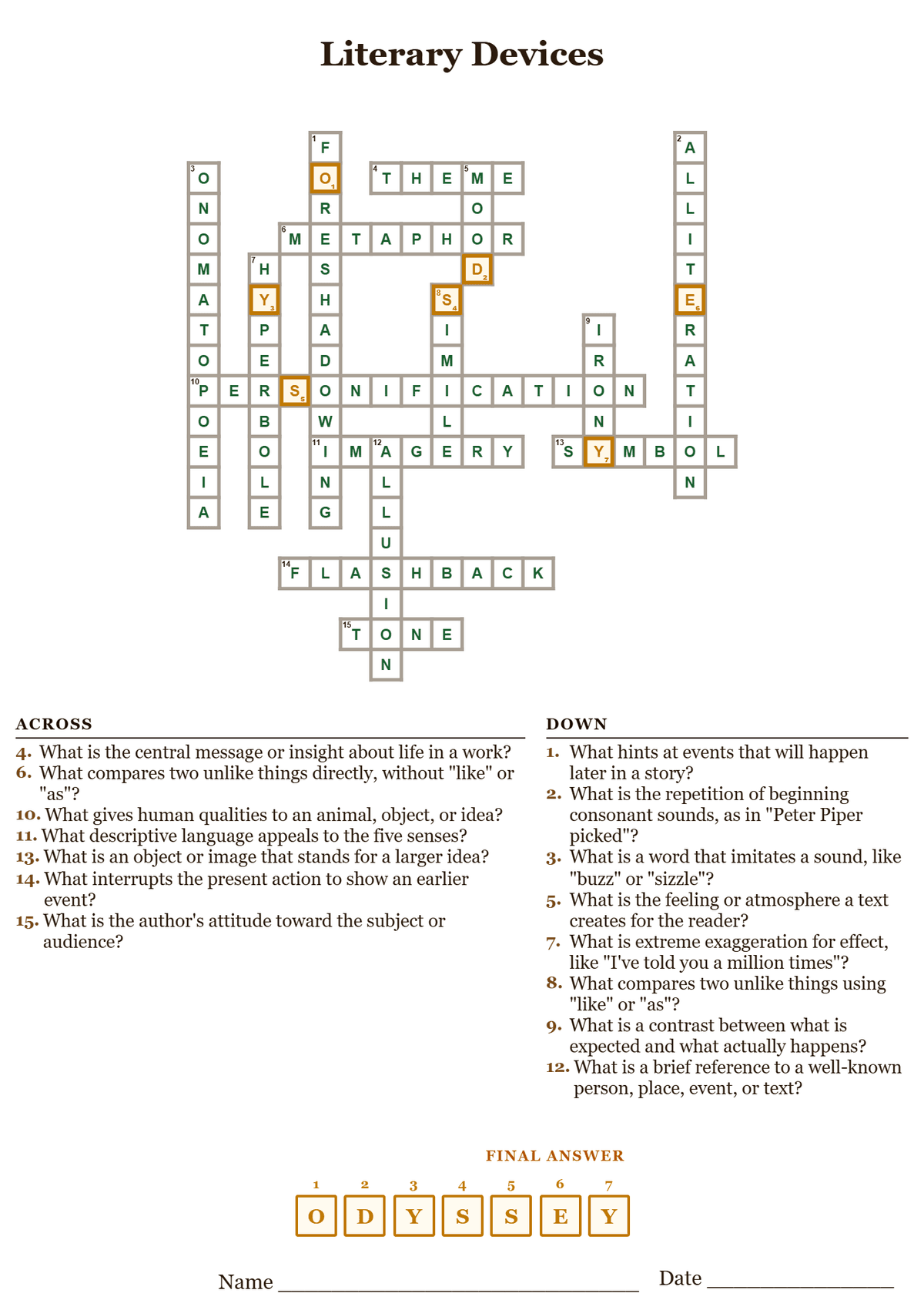
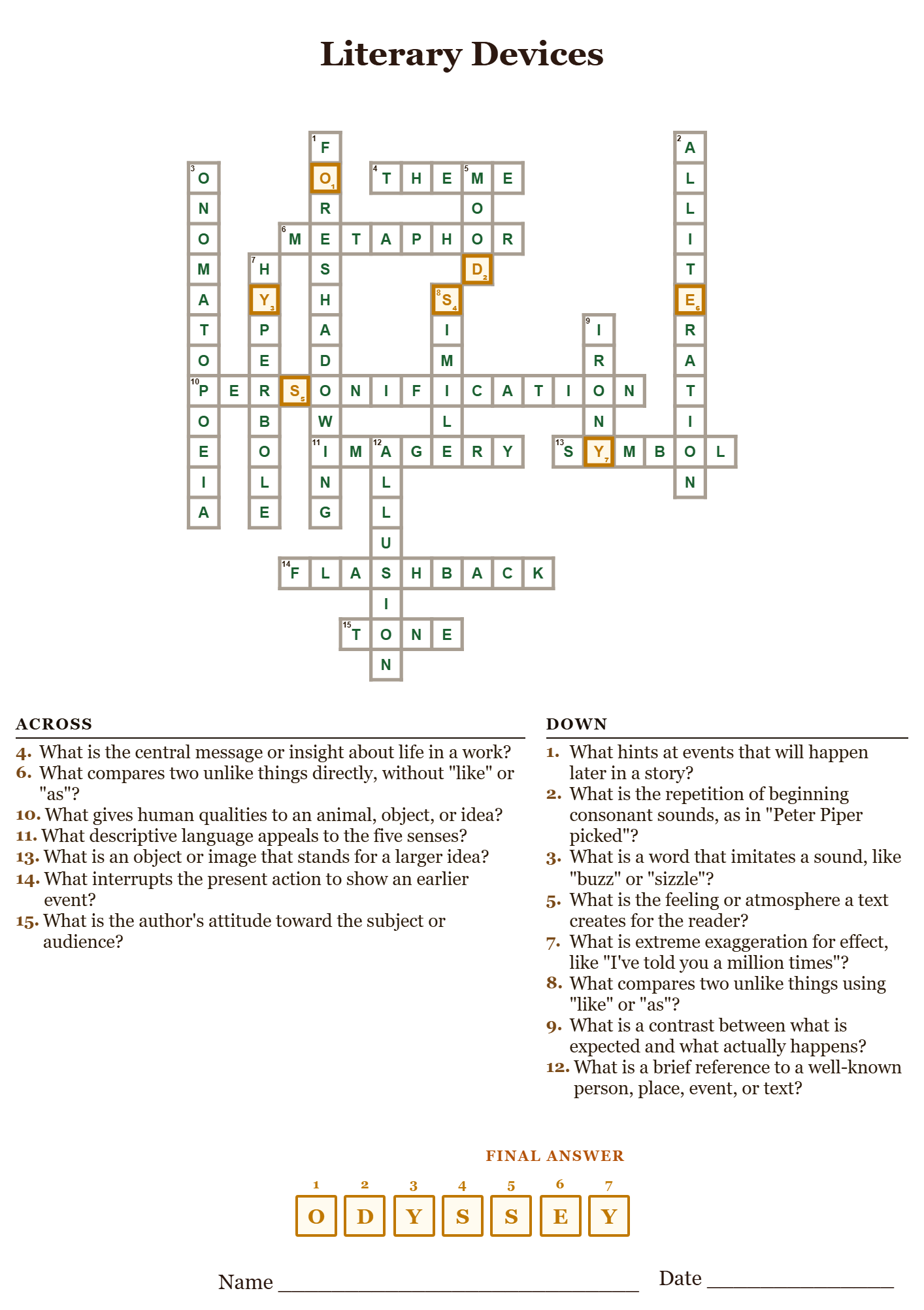
Want to use this template?
Start from this exact puzzle, with its decorative template already applied.
See the finished versionReady to make your own?
Create your crossword puzzleWords used in this puzzle
What compares two unlike things directly, without "like" or "as"? | METAPHOR
What compares two unlike things using "like" or "as"? | SIMILE
What gives human qualities to an animal, object, or idea? | PERSONIFICATION
What is extreme exaggeration for effect, like "I've told you a million times"? | HYPERBOLE
What is the repetition of beginning consonant sounds, as in "Peter Piper picked"? | ALLITERATION
What is a word that imitates a sound, like "buzz" or "sizzle"? | ONOMATOPOEIA
What hints at events that will happen later in a story? | FORESHADOWING
What interrupts the present action to show an earlier event? | FLASHBACK
What is a contrast between what is expected and what actually happens? | IRONY
What is an object or image that stands for a larger idea? | SYMBOL
What is a brief reference to a well-known person, place, event, or text? | ALLUSION
What descriptive language appeals to the five senses? | IMAGERY
What is the author's attitude toward the subject or audience? | TONE
What is the feeling or atmosphere a text creates for the reader? | MOOD
What is the central message or insight about life in a work? | THEME
Copy and paste directly into the crossword maker.
Swap this list for whatever your class is reading right now — a novel's characters and settings, poetry terms, or rhetorical appeals — the same approach works for any literature vocabulary set. Paste the whole list in at once with the bulk-paste option, or add clues one at a time. Print one copy per student with answers hidden, then flip on Show answers and print a second copy for yourself as an answer key. No login, no student accounts, and nothing about your class gets collected or stored.
Perfect for
- Review before a literary analysis essay or test
- Bell ringer during a poetry or novel unit
- AP Literature or AP Language warm-up
- Sub plan for a 9-12 English class