Reading & Writing Vocabulary Crossword Puzzle | Free Printable Worksheet
A low-stakes way to review reading and writing vocabulary before a test: literary terms like plot, theme, and irony, the words any English class leans on. Ready to print as a bell ringer, a sub plan, or an early-finisher handout — no prep beyond hitting print.
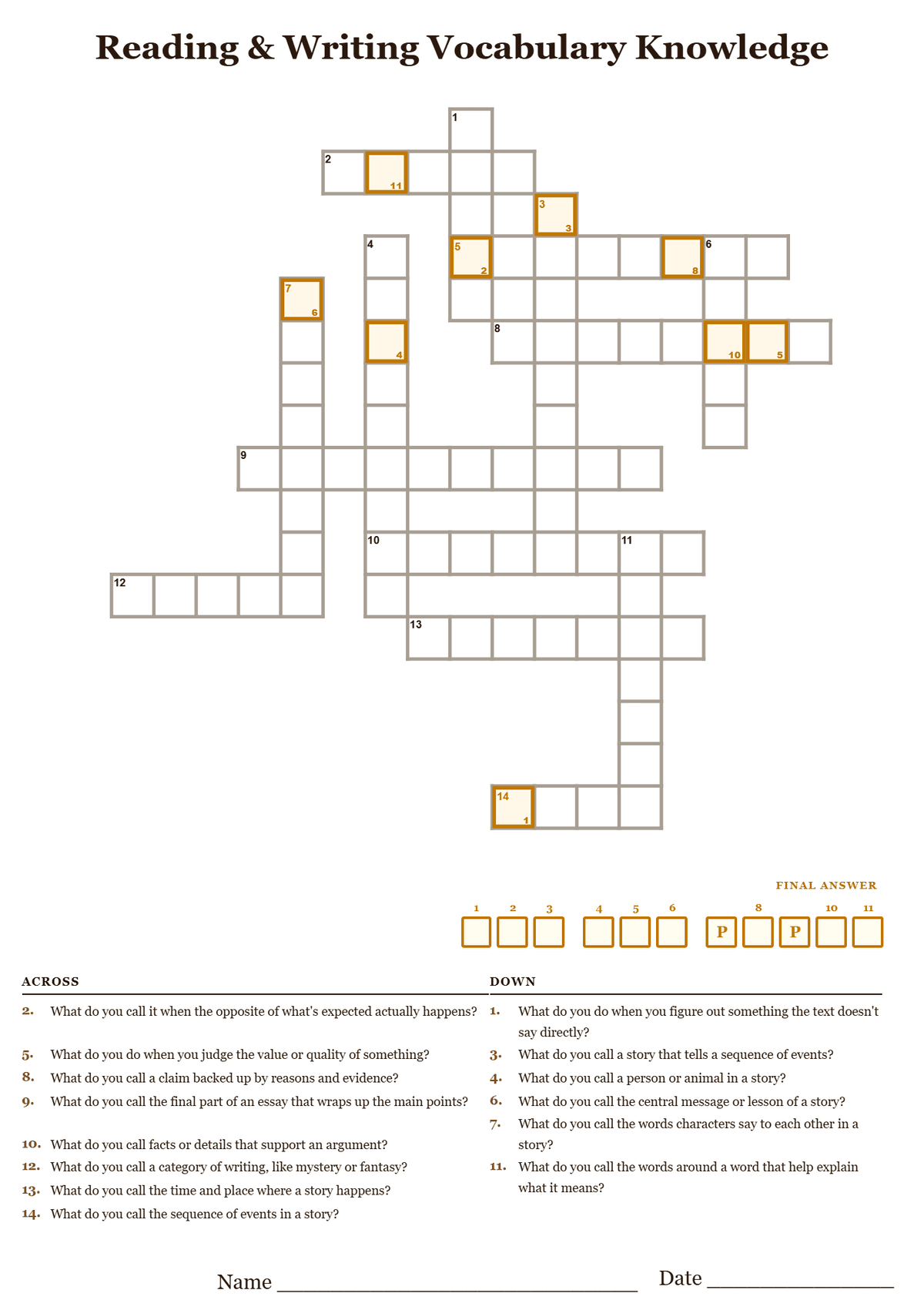
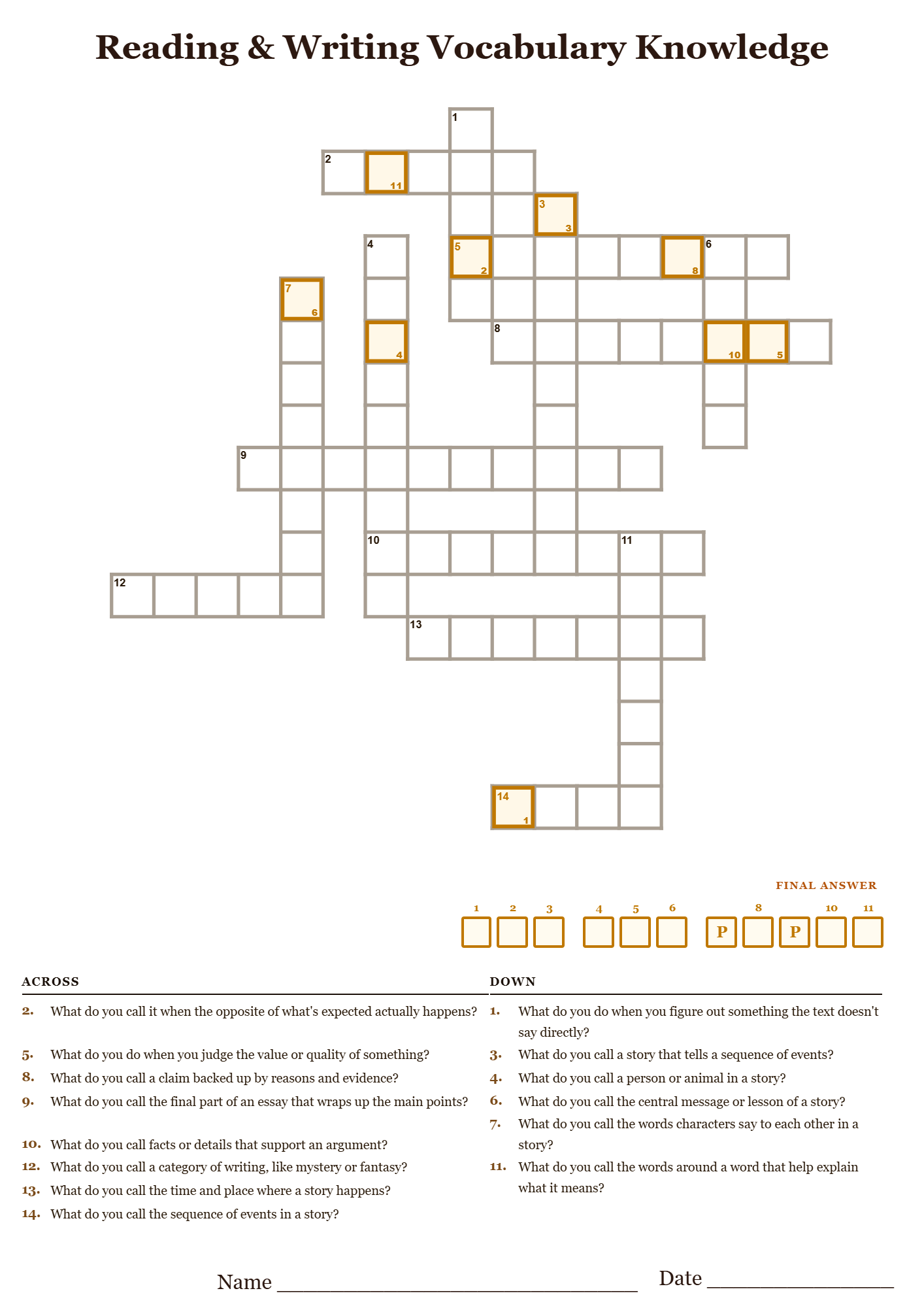
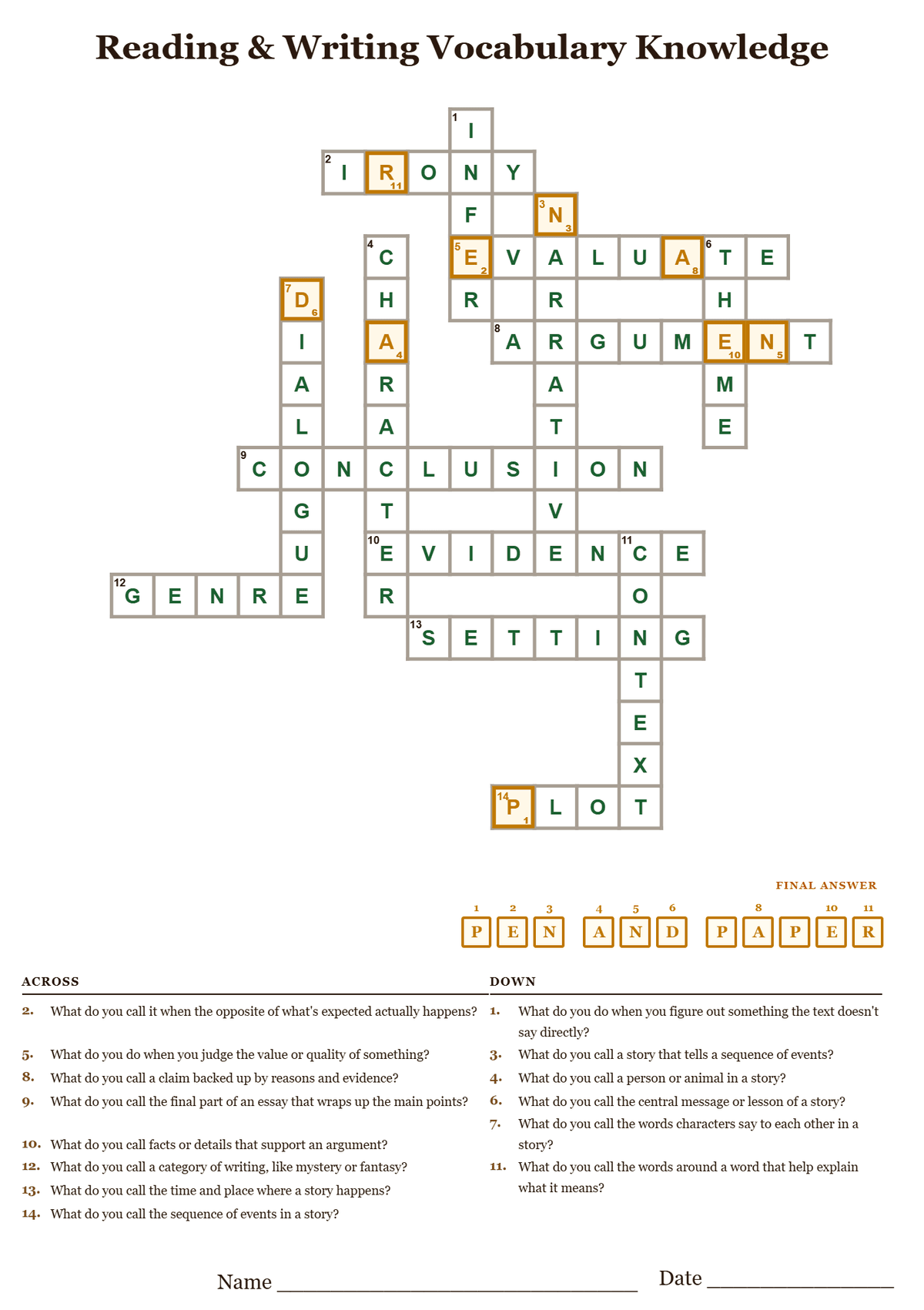
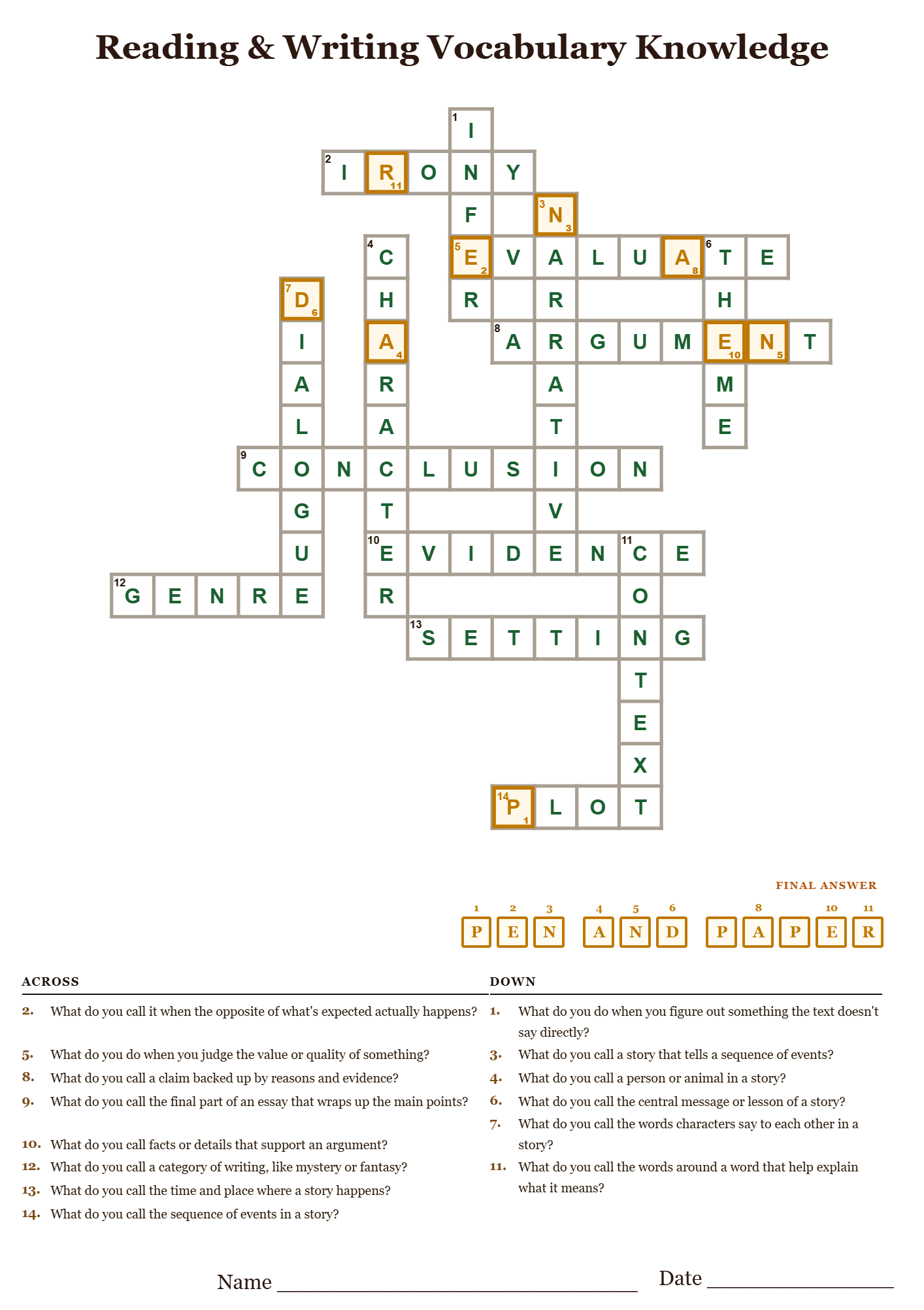
Want to use this template?
Start from this exact puzzle, with its decorative template already applied.
See the finished versionReady to make your own?
Create your crossword puzzleWords used in this puzzle
What do you do when you figure out something the text doesn't say directly? | INFER
What do you call facts or details that support an argument? | EVIDENCE
What do you call the words around a word that help explain what it means? | CONTEXT
What do you call a story that tells a sequence of events? | NARRATIVE
What do you call the words characters say to each other in a story? | DIALOGUE
What do you call the time and place where a story happens? | SETTING
What do you call the sequence of events in a story? | PLOT
What do you call the central message or lesson of a story? | THEME
What do you call a person or animal in a story? | CHARACTER
What do you call the final part of an essay that wraps up the main points? | CONCLUSION
What do you call a comparison between two things used to explain an idea? | ANALOGY
What do you call a claim backed up by reasons and evidence? | ARGUMENT
What do you do when you judge the value or quality of something? | EVALUATE
What do you call a category of writing, like mystery or fantasy? | GENRE
What do you call it when the opposite of what's expected actually happens? | IRONY
Copy and paste directly into the crossword maker.
Swap this list for whatever your class is actually reading — vocabulary from a specific novel, a different genre, or a grammar unit works the same way. Paste the whole list in at once with the bulk-paste option, or add clues one at a time. Set the hidden message to DICTIONARY for a fitting reveal once the grid's filled in, then print one copy per student with answers hidden and a second copy for yourself as an answer key. No login, no student accounts, and nothing about your class gets collected or stored.
Perfect for
- Weekly reading vocabulary review
- Pre-test study guide for English or Language Arts
- Bell ringer before a reading or writing lesson
- Sub plan for an ELA class